


YUEYANG CHEM WATERBORNE ADDITIVE CO., LTD. was established in 2010 and is located in Yueyang, Hunan. It specializes in the R&D, production and sales of environmentally friendly additives. CHEM-ADDITIVE has technical teams for chemical analysis, chemical synthesis and additive application, and has established extensive industry-university-research cooperation with scientific research units such as Huazhong University of Science and Technology, Wuhan University, Hunan University, and Central South University of Forestry and Technology.
Why Choose Us
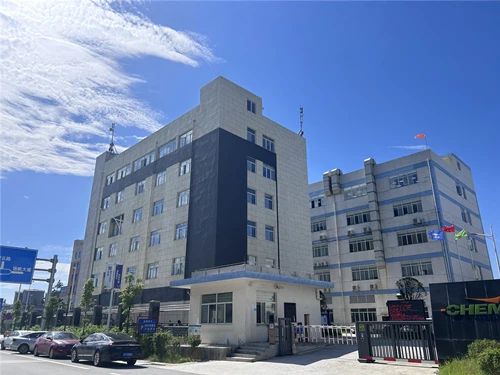
Our factory
YUEYANG CHEM WATERBORNE ADDITIVE CO., LTD. was established in 2010 and is located in Yueyang, Hunan. It specializes in the R&D, production and sales of environmentally friendly additives.
Product application
CHEM-ADDITIVE is committed to waterborne green environmental protection in the coatings, inks, adhesives and other markets, and provides corresponding solutions.
Production equipment
In order to ensure product quality, the company is equipped with advanced testing instruments, including Agilent 5890 gas chromatograph and gas phase-linked mass spectrometer, Mettler-Toledo acidity meter, and German SITA dynamic surface tension meter.
Our certifications
The company has passed the international ISO9001:2015 quality management system certification and IS014001:2015 environmental management system certification, as well as the EU chemical industry's joint efforts to achieve sustainable development Tfs certification, 16949 automotive industry quality management system and reach registration, all of which have contributed to the company's sustainable operations and Stable and reliable product quality provides institutional guarantee.

Organic Silicon Leveling Agent
Silicone-Based Leveling Agent is a surfactant derived from silicone compounds, designed to enhance the flow and leveling properties of coatings, inks, and other liquid materials.

Fluorine-modified Leveling Agent
Fluorinated Leveling Agent is a type of leveling agent modified with fluorinated groups, designed to enhance the flow and leveling properties of coatings and other liquid materials.

Linear Polyether Modified Siloxane Leveling Agent
Linear Polyether Modified Siloxane Leveling Agent is a type of leveling agent modified with linear polyether and siloxane components.

Branched Polyether Modified Siloxane Leveling Agent
Branch-Chain Polyether Modified Siloxane Leveling Agent is a type of leveling agent made by incorporating branch-chain polyether structures into siloxane groups.

Pure Acrylic Ester Leveling Agent is a type of leveling agent made from polymerized acrylic ester monomers.

Modified Acrylate Leveling Agent
Modified Acrylic Ester Leveling Agent is a leveling agent made from chemically modified acrylic ester monomers.

Fluorine-modified Siloxane Leveling Agent
Fluorinated Siloxane Leveling Agent is a type of leveling agent modified by incorporating fluorine atoms into siloxane molecules.

Fluorocarbon Compound Leveling Agent is a type of leveling agent that contains fluorocarbon groups in its molecular structure. Known for its exceptional surface properties and stability.

Solvent-Based Leveling Agent is a type of leveling agent dissolved in organic solvents, primarily used to adjust the flow and application properties of coatings.
What Is Acrylate Leveling Agent
Acrylate-based leveling agent is a type of surfactant derived from acrylate compounds, designed to enhance the flow and leveling properties of coatings, inks, and other liquid materials. It works by adjusting the surface tension of the liquid to ensure an even coating surface, minimizing defects such as runs and streaks, and improving the final product's appearance. Surfactant molecules in acrylate-based leveling agents effectively lower the surface tension of the liquid, improving flow. Helps the coatings or inks flow evenly during application, avoiding surface defects like runs and streaks. During curing, acrylate-based leveling agents aid in forming a smooth and uniform surface, enhancing appearance.
Advantages of Acrylate Leveling Agent
Leveling
Acrylate leveling compounds are designed to reduce the surface tension of coatings, allowing them to spread more evenly over a substrate. This helps to minimize surface defects such as brush marks, roller marks, orange peel, or unevenness, resulting in a smoother finish.
Flow control
These compounds improve the flow properties of coatings, enabling them to self-level and eliminate irregularities as they dry. By enhancing flow, acrylate leveling compounds help coatings to conform to the contours of the substrate, filling in gaps and providing a more uniform surface appearance.
Surface wetting
Acrylate leveling compounds enhance the wetting properties of coatings, allowing them to adhere better to the substrate. Improved wetting ensures proper adhesion and helps prevent issues such as delamination or peeling, particularly on difficult-to-coat surfaces.
Defoaming
Some acrylate leveling compounds also have defoaming properties, which help to eliminate air bubbles trapped in the coating during application. By reducing foam formation, these compounds contribute to a smoother, bubble-free finish.
Compatibility
Acrylate leveling compounds are designed to be compatible with various coating formulations, including solvent-based, water-based, and UV-curable systems. They can be tailored to specific coating chemistries and application requirements, ensuring optimal performance and compatibility with other additives.
Versatility
Acrylate leveling compounds are used in a wide range of applications, including architectural coatings, automotive coatings, wood finishes, industrial coatings, and printing inks. Their versatility makes them suitable for diverse substrates and coating systems.

Polyacrylates and (fluorinated) polyacrylates are a very versatile class of additives used in the coatings as flow and leveling agents. Pure polyacrylate copolymers are highly appreciated for their flow performance, however, do not significantly lower the surface tension of a system to solve problems like cratering or poor substrate wetting. While on the other hand, polyacrylates with fluorinated side chains can lower the surface tension of a formulation. They combine excellent flow and leveling with anti-cratering and good wetting behavior.
For example, in the case of coil coating applications a true surface tension balance is needed to achieve good leveling. Experience shows that fluorocarbon-modified polyacrylates are the most suitable products here. They lower the surface tension to overcome possible defects but not too low to cause bad leveling.
They have a relatively high surface tension: avoid intercoat adhesion issues. They improve the localized harmonization of surface tension by reducing the gradient surface tension, and as a consequence improve the leveling. Excellent to reduce the surface short waves (< 1.2mm). Limited in the surface tension reduction. But as surface tension agents, they can also have an influence on the air entrapment, especially high molecular weight versions. Due to their low influence on the surface tension, polyacrylates are also recommended in primers!
The product is acrylic ester copolymer. It can reduce or eliminate coating surface defects like pinhole, fisheye and orange peel. It also can improve leveling per formance. It cannot affect adhesive force between coating layer, which can be used in powder coating and solvent coating. The product is thick polymer, and it is the basic material for making solid leveling agent.
The product is acrylic ester copolymer. It can reduce or eliminate coating surface defects like pinhole, fisheye and orange peel. It also can improve leveling per formance. It cannot affect adhesive force between coating layer, which can be used in powder coating and solvent coating. The product is thick polymer, and it is the basic material for making solid leveling agent.
It can be added in any process during coating production. The consumption is generally 0.5-1.5% of the total amount. The exact consumption depends on the test result.

Popular Acrylic Acrylate Leveling Agents Used in the Coatings Industry
To synthesize acrylate leveling agents, butyl acrylate is usually polymerized with amines and alkyl esters. The polymerization initiators are usually BPO and AIBN. The polymerization temperature is controlled at 80-90 ° C. The solvents are toluene, xylene, cyclohexane and the like. The relative molecular weight of the polymer is controlled between 4000 and 10,000. The narrower the molecular weight distribution, the better the leveling effect.
Acrylate leveling agents are mainly used in the production and construction of powder coatings. Leveling agents are commonly used to improve the appearance of coating films and eliminate surface defects such as orange peel, shrinkage, pinholes and edge shrinkage. Leveling agent eliminates surface defects of the coating film by reducing or changing surface tension and interfacial tension, and by promoting uniformity of surface tension during curing. High-quality leveling agents can reduce the melt viscosity of the system, thereby helping melt mixing and pigment dispersion, improving the wettability of the substrate, improving the fluidity and leveling of the coating, helping to eliminate surface defects, and facilitating delamination mold. In powder coatings, the most commonly used leveling agents are acrylate homopolymers and copolymers and modified polysiloxanes. Compared to polysiloxanes, polyacrylate leveling agents are less sensitive to excess and contamination. As a result, the more popular system used by leveling agent manufacturers in the coatings industry remains acrylate leveling agents.
Acrylate Leveling Agent Preparation Method and Use Thereof
It has been confirmed that polyacrylate is suitable as a leveling agent for coating systems, which is uniformly distributed on the surface of the coating film due to limited compatibility with the resin system, and a new interface layer having uniform surface tension is formed on the surface of the coating film. Further, a smooth and smooth coating film is obtained. However, the disadvantage of the polyacrylate leveling agent is that its incompatibility with the resin system increases with the increase of the molecular weight of the polymer, which may cause turbidity of the coating and haze of the coating film; and high molecular weight polyacrylic acid. The higher viscosity of the ester leveling agent can cause operational problems for the paint manufacturer.
Due to the presence of macromolecular side chains, have a very high molecular weight, but a small basic molecular chain length ensures a low molecular weight. Viscosity. However, these branched polymers have the disadvantage of requiring preparation of a macromonomer, which has many preparation steps, is difficult to separate and purify, and is expensive, and is disadvantageous for large-scale industrial production. However, the molecular weight distribution of the polymer can be at a very narrow level by active controlled radical polymerization, and the molecular weight distribution index can be adjusted to 1.5; the narrower molecular weight distribution can improve the viscosity and incompatibility of the high molecular weight polyacrylate. To better exert the performance of polyacrylate as a leveling agent; in addition, the polymer prepared by active controlled radical polymerization can satisfy the polymerization of the second monomer to form a block copolymer due to the retention of the active terminal, thereby satisfying The need for polyacrylate leveling agents in the diversity of polymer chain structures. Therefore, the use of the above method to develop a novel polyacrylate leveling agent to overcome the defects of orange peel, shrinkage, and the like, and to have industrial production prospects, is a hot spot in the field.
It has the following advantages over the prior art: the polyacrylate leveling agent of the present invention is formed by polymerization of a specific monomer A and monomer B, especially in the chemical structure formula. In the presence of a telogen, a controlled radical polymerization of RAFT activity is carried out to prepare a narrow molecular weight distribution polyacrylate leveling agent; R 9 and R 7 are each independently an alkyl group, and R 8 is a phenyl group, a cyano group, Carboxyl or ester group; Z is phenyl, alkyl, alkylthio, phenoxy, alkoxy, alkylamino or nitrogen-containing heterocyclic group; the leveling agent thus obtained is used in a coating or ink system It can significantly improve the coating coating and anti-cratering ability, improve the wetting effect of the substrate; it is more likely to impart a smooth and scratch-resistant effect on the coating film; the preparation method is simple and easy to mass-produce.
All acrylate leveling agent must be stored in a safe, secure location. Shelves should be level, stable, and secured to the wall or another stable. Store acrylate leveling agent away from direct sunlight, sources of heat, and egress pathways. Hazardous acrylate leveling agent must be stored below eye level.
Do not store acrylate leveling agent on the floor, window ledges, or balconies. Keep containers closed unless you are dispensing a chemical or adding to the container. Provide secondary containment for liquids whenever possible. Dishpans or polyethylene trays work. Don't store acrylate leveling agent in a sink or fume hood, except for certain toxic gases that are so dangerous they can only be stored in a gas cabinet or fume Label containers, and be sure container is compatible with the chemical.
Use rated storage cabinets or safety cans whenever possible-required for >10 gal. of flammables. Cold rooms, refrigerators, and freezers have additional requirements, particularly for flammables.
Our factory
YUEYANG CHEM WATERBORNE ADDITIVE CO., LTD. was established in 2010 and is located in Yueyang, Hunan. It specializes in the R&D, production and sales of environmentally friendly additives. CHEM-ADDITIVE has technical teams for chemical analysis, chemical synthesis and additive application, and has established extensive industry-university-research cooperation with scientific research units such as Huazhong University of Science and Technology, Wuhan University, Hunan University, and Central South University of Forestry and Technology. The company has hired a team of professional consultants composed of industry experts and professors. After more than 10 years of practice and accumulation, YUEYANG CHEM WATERBORNE ADDITIVE CO., LTD. has established a good corporate image among domestic and foreign customers. CHEM-ADDITIVE's acetylenic alcohol multifunctional surfactant was supported by the Innovation Fund Project of the National Ministry of Science and Technology and the Hunan Provincial Department of Science and Technology in 2012 and 2013, and successfully passed the project acceptance. At present, the company has a number of invention patents with independent intellectual property rights, and is one of the major manufacturers and suppliers of acetylenic alcohol waterborne surfactants, SMA and silicone in the world.



FAQ
Hot Tags: acrylate leveling agent, China acrylate leveling agent manufacturers, suppliers, factory, Corrosion Inhibitors, Polymer type Super Dispersants, Organic Amine Mixtures, Defoaming Agent For Leather Finishing, Automotive Original Paint Wetting Agent, Water based Industrial Coating Wetting Agent


