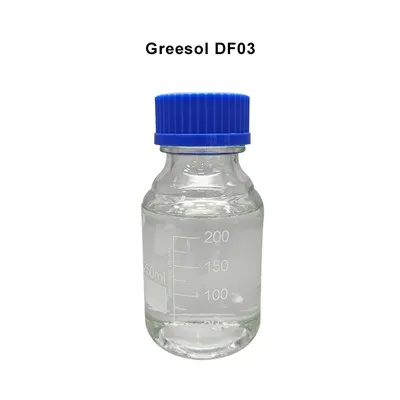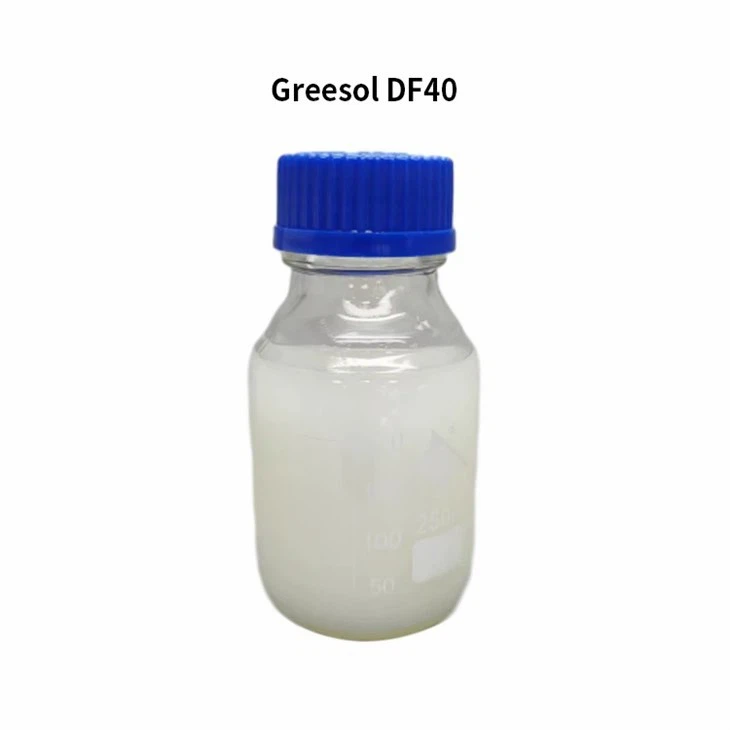
YUEYANG CHEM WATERBORNE ADDITIVE CO., LTD. was established in 2010 and is located in Yueyang, Hunan. It specializes in the R&D, production and sales of environmentally friendly additives. CHEM-ADDITIVE has technical teams for chemical analysis, chemical synthesis and additive application, and has established extensive industry-university-research cooperation with scientific research units such as Huazhong University of Science and Technology, Wuhan University, Hunan University, and Central South University of Forestry and Technology.
Why Choose Us
Our factory
YUEYANG CHEM WATERBORNE ADDITIVE CO., LTD. was established in 2010 and is located in Yueyang, Hunan. It specializes in the R&D, production and sales of environmentally friendly additives.
Product application
CHEM-ADDITIVE is committed to waterborne green environmental protection in the coatings, inks, adhesives and other markets, and provides corresponding solutions.
Production equipment
In order to ensure product quality, the company is equipped with advanced testing instruments, including Agilent 5890 gas chromatograph and gas phase-linked mass spectrometer, Mettler-Toledo acidity meter, and German SITA dynamic surface tension meter.
Our certifications
The company has passed the international ISO9001:2015 quality management system certification and IS014001:2015 environmental management system certification, as well as the EU chemical industry's joint efforts to achieve sustainable development Tfs certification, 16949 automotive industry quality management system and reach registration, all of which have contributed to the company's sustainable operations and Stable and reliable product quality provides institutional guarantee.

An acetylenic diol defoamer is a type of additive based on acetylenic diol compounds, specifically designed to reduce or eliminate foam in liquids.

An ethoxylated acetylenic diol defoamer is a type of defoamer derived from acetylenic diol molecules that have been modified through ethoxylation.

Silicone-based defoaming agents are defoamers derived from silicone compounds, widely used in various industrial processes. .

Alkyne Diol Modified Defoamers
Acetylenic diol modified defoaming agents are chemically modified defoamers based on acetylenic diol structures.

Alkane-based defoaming agents are defoamers primarily composed of alkanes, widely used in industrial fields where efficient foam control is necessary.

Molecular-level defoaming agents are a class of defoamers precisely engineered at the molecular level to provide efficient foam control in specific industrial systems.

Deaerators are chemical additives specifically designed to remove entrapped air and gas bubbles from liquid systems.

Antifoam agents are additives specifically designed to prevent or slow down the formation and accumulation of foam during production processes.

Defoamers are chemical additives specifically designed to eliminate already formed foam. Unlike antifoam agents, which prevent foam formation, defoamers work by reducing the surface tension of the foam or disrupting the stability of the foam walls, causing the foam to collapse rapidly.
What Is Mineral Oil Defoamers
Mineral oil defoamers consist of approximately 85–95 % mineral oil and 1–3 % hydrophobic particles. They also contain emulsifiers, biocides and other performance-enhancing ingredients such as modified polysiloxanes. Aliphatic mineral oils are used as the carrier oil. Emulsifiers are required in defoamers to ensure efficient dispersion of the particles in the mineral oil. They also make it easier to incorporate the defoamer in the coating formulation.
Advantages of Mineral Oil Defoamers
Excellent Defoaming Properties
Mineral oil defoamers are effective at breaking down foam and preventing its formation in various processes. They have strong surface tension reduction capabilities, which help in the quick elimination of foam.
Versatility
These defoamers are versatile and can be used in different applications, such as in aqueous systems, organic solvents, and non-aqueous systems
Compatibility
Mineral oil defoamers are typically compatible with a wide range of formulations and process conditions. They can be used in acidic, alkaline, and neutral environments without losing their effectiveness.
Chemical Stability
They exhibit good chemical stability, which means they can withstand exposure to various chemicals and harsh conditions without undergoing degradation or losing their defoaming properties.
Non-Toxic and Food-Grade Options
Many mineral oil defoamers are available in non-toxic and food-grade formulations, making them suitable for use in industries where direct or indirect contact with food is possible, such as food processing and beverage manufacturing.
Temperature Stability
They maintain their performance across a broad range of temperatures, from ambient to high temperatures, without significant degradation.

It should be known that mineral oil defoamers are widely used in various industries, such as: wastewater treatment after ink and paint production, a large amount of foam due to excessive chemical additives in wastewater and surfactants in circulating water. In the production of water-based coatings, it is necessary to add chemical additives followed by mechanical and physical effects, so that air can enter into it to generate a large amount of foam, etc. Mineral oil defoamers can be used. Whether it is physical or chemical factors, mineral oil defoamers can deal with it freely.
The main components of mineral oil defoamers contain mineral oil, inorganic hydrophobic particles, and emulsifiers, which can be used in all areas that are not suitable for silicone defoamers. The inorganic hydrophobic particles will be evenly distributed in the mineral oil, and then through the action of the emulsifier to achieve the characteristics of self-emulsification and dispersion of the defoamer, and finally form an emulsion that can be dispersed in water and become a moderately stable emulsion--mineral oil defoamer foaming agent. Due to its good diffusibility and permeability, the defoaming factor can more easily reach the liquid film surface and the water-insoluble state, destroying the integrity of the liquid film, so that the foam bursts to achieve defoaming; and the mineral oil defoamer itself It has low surface tension and is dispersed on the surface of the liquid to make it difficult to foam again to achieve the effect of foam suppression.
The defoaming mechanism of mineral oil is that mineral oil is insoluble with water on the liquid film of the foam, destroying the integrity of the liquid film, causing the recovery of the liquid film and the fluidity to be destroyed, thereby causing the foam to rupture and thereby defoaming. Even in the emulsion, the mineral oil is only emulsified and water, and is not soluble in water. Therefore, the larger the mineral oil droplets, the better the defoaming, that is, the defoaming of the emulsion (milky white) is generally better than that of the microemulsion. Translucent, transparent). The carbon chain of mineral oil has little effect on defoaming.

Application of Mineral Oil Defoamers
Mineral oil defoamers applied for all types of synthetic latex, in particular applied to rubber and plastics industry polymerization, condensation,degassing step,can eliminate foam produced by different surfactants in this system. And it can also be used in resins, water-based paint, latex paint, water-based ink, emulsion polymerization, polymer gel, lotion benzene Bing black liquor, petrochemical and all NA silicone defoamers industry.
Because increasingly sharpening of environmental issue, people's environmental consciousness also strengthen day by day, the needed auxiliary agents of industry such as weaving, leather, packing, coating, printing ink are Water-borne modification more and more.And the Water-borne modification product must just can reach hydrophilic effect by the introducing of hydrophilic radical or surfactant, the use of exhibiting high surface activating agent must bring inevitable side effect, be the generation of foam, the existence of foam has brought serious harm for production, use and the post-processed etc. of product.Therefore aqueous product has higher froth breaking requirement than oil product, and in order to reach this requirement, increasing defoamer comes out, and the antifoam performance of most of product does not reach requirement.The a kind of of the present invention exploitation is the defoamer of main component with wax, is mainly used in adhesive and water treatment field, has good antifoam performance, and it is perfect market product is for the aqueous promoter series products provides novel defoamer kind.
A kind of preparation method of mineral oil antifoam agent, it comprises the steps: A certain amount of mineral oil is added in the reaction vessel, under dispersion condition, add in wax, white carbon black, emulsifying agent, oleic acid or the stearic acid at least a; add finish after, the system that is dispersed to is uniformly dispersed substantially; grind dispersion 4~6 times; qualified back discharging promptly. Wherein, the ratio of at least a quality is in mineral oil, wax, white carbon black, emulsifying agent, oleic acid or the stearic acid: 40~100:5~7:0.4~0.8:4~6:1~3. Described mineral oil is No. 15 white oils, and it is the linear paraffin mixture, is a kind of cut of oil.
Described wax is: One or more in paraffin, microwax, the palm wax etc., the temperature of described paraffin is 58 ℃. Described white carbon black is selected from white carbon black R972, white carbon black A380.
Described emulsifying agent is one or more in S-60 emulsifying agent, NP-8 emulsifying agent or the AEO-7 emulsifying agent.
Beneficial effect: The preparation method of a kind of mineral oil antifoam agent of the present invention passes through to select suitable wax or modified waxes kind, thereby makes the preparation mineral oil antifoam agent have good dispersion, defoaming effect and storage stability.
Factors to Consider When Choosing an Mineral Oil Defoamers
In aqueous environments, the right antifoam or defoamer product can minimize or eliminate issues associated with foam. Some of the questions you should answer before choosing an antifoam or defoamer for a given application include:
Is the antifoam/defoamer compatible with the process?
Antifoams and defoamers are generally inert chemicals consisting of a liquid (e.g., silicone, mineral oils, or hydrophobic surfactants) and a hydrophobic solid (e.g., fatty acids, fatty alcohols, silica, or wax). Ultimately, the antifoam/defoamer you select should have a balance of compatibility and incompatibility. It should be compatible enough that it effectively disperses in the foaming medium. Otherwise, it may cause deposition issues. However, it should be insoluble to the point that it remains in fine droplet form within the solution.
Will the antifoam/defoamer cause deposit issues?
The antifoam/defoamer should be sufficiently compatible within the solution so as to not create deposits. Will the antifoam/defoamer negatively affect the catalyst I am using? The antifoam/defoamer should not negatively impact any catalysts used in the process.
Will the antifoam/defoamer plug up any membranes or filters?
The antifoam/defoamer should not carry the potential for plugging/clogging filters and membranes that can compromise the product or process.
Is the antifoam/defoamer composition effective for my application?
Antifoams and defoamer come in many varieties. The one you choose should suit your individual requirements and restrictions. Will the antifoam/defoamer have any negative effects on downstream conditions? The antifoam/defoamer should not cause any adverse downstream effects. The answers to these questions must be weighed appropriately. In some cases, you must compromise on a solution.
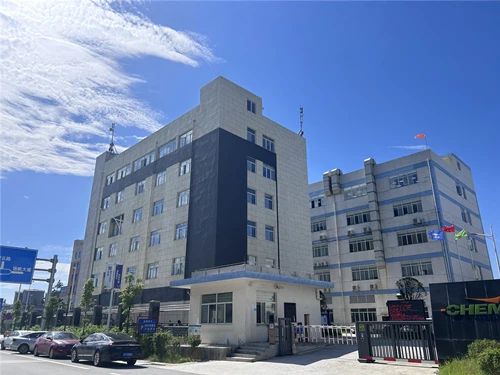
Our factory
YUEYANG CHEM WATERBORNE ADDITIVE CO., LTD. was established in 2010 and is located in Yueyang, Hunan. It specializes in the R&D, production and sales of environmentally friendly additives. CHEM-ADDITIVE has technical teams for chemical analysis, chemical synthesis and additive application, and has established extensive industry-university-research cooperation with scientific research units such as Huazhong University of Science and Technology, Wuhan University, Hunan University, and Central South University of Forestry and Technology. The company has hired a team of professional consultants composed of industry experts and professors. After more than 10 years of practice and accumulation, YUEYANG CHEM WATERBORNE ADDITIVE CO., LTD. has established a good corporate image among domestic and foreign customers. CHEM-ADDITIVE's acetylenic alcohol multifunctional surfactant was supported by the Innovation Fund Project of the National Ministry of Science and Technology and the Hunan Provincial Department of Science and Technology in 2012 and 2013, and successfully passed the project acceptance. At present, the company has a number of invention patents with independent intellectual property rights, and is one of the major manufacturers and suppliers of acetylenic alcohol waterborne surfactants, SMA and silicone in the world.



FAQ
Hot Tags: mineral oil defoamers, China mineral oil defoamers manufacturers, suppliers, factory, Railway Coating Dispersant, Solvent based Dispersants, Container Coating Dispersant, SMA Dispersants, Resin free Color Paste Dispersant, Ionic Wetting Agent