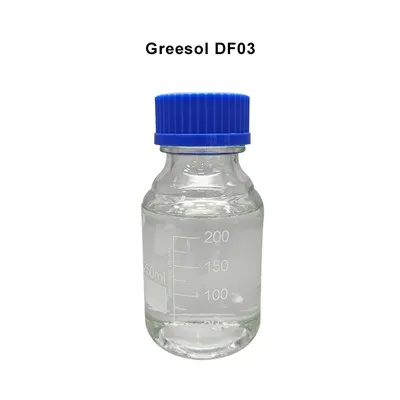
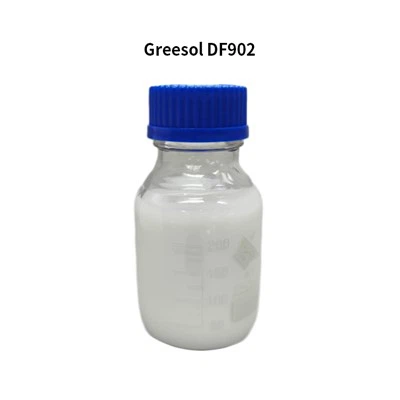
YUEYANG CHEM WATERBORNE ADDITIVE CO., LTD. was established in 2010 and is located in Yueyang, Hunan. It specializes in the R&D, production and sales of environmentally friendly additives. CHEM-ADDITIVE has technical teams for chemical analysis, chemical synthesis and additive application, and has established extensive industry-university-research cooperation with scientific research units such as Huazhong University of Science and Technology, Wuhan University, Hunan University, and Central South University of Forestry and Technology.
Why Choose Us
Our factory
YUEYANG CHEM WATERBORNE ADDITIVE CO., LTD. was established in 2010 and is located in Yueyang, Hunan. It specializes in the R&D, production and sales of environmentally friendly additives.
Product application
CHEM-ADDITIVE is committed to waterborne green environmental protection in the coatings, inks, adhesives and other markets, and provides corresponding solutions.
Production equipment
In order to ensure product quality, the company is equipped with advanced testing instruments, including Agilent 5890 gas chromatograph and gas phase-linked mass spectrometer, Mettler-Toledo acidity meter, and German SITA dynamic surface tension meter.
Our certifications
The company has passed the international ISO9001:2015 quality management system certification and IS014001:2015 environmental management system certification, as well as the EU chemical industry's joint efforts to achieve sustainable development Tfs certification, 16949 automotive industry quality management system and reach registration, all of which have contributed to the company's sustainable operations and Stable and reliable product quality provides institutional guarantee.

An acetylenic diol defoamer is a type of additive based on acetylenic diol compounds, specifically designed to reduce or eliminate foam in liquids.

An ethoxylated acetylenic diol defoamer is a type of defoamer derived from acetylenic diol molecules that have been modified through ethoxylation.

Silicone-based defoaming agents are defoamers derived from silicone compounds, widely used in various industrial processes. .

Alkyne Diol Modified Defoamers
Acetylenic diol modified defoaming agents are chemically modified defoamers based on acetylenic diol structures.

Alkane-based defoaming agents are defoamers primarily composed of alkanes, widely used in industrial fields where efficient foam control is necessary.

Molecular-level defoaming agents are a class of defoamers precisely engineered at the molecular level to provide efficient foam control in specific industrial systems.

Deaerators are chemical additives specifically designed to remove entrapped air and gas bubbles from liquid systems.

Antifoam agents are additives specifically designed to prevent or slow down the formation and accumulation of foam during production processes.

Defoamers are chemical additives specifically designed to eliminate already formed foam. Unlike antifoam agents, which prevent foam formation, defoamers work by reducing the surface tension of the foam or disrupting the stability of the foam walls, causing the foam to collapse rapidly.
What Is Organic Silicone Defoamers
Silicone-based defoaming agents are defoamers derived from silicone compounds, widely used in various industrial processes. Known for their low surface tension and high defoaming efficiency, they quickly disrupt foam stability, preventing foam formation and accumulation. Silicone-based defoaming agents work by reducing the surface tension of the system, rapidly spreading across the foam surface and breaking the elasticity of the foam film, leading to foam collapse. Their unique molecular structure ensures consistent defoaming performance across various conditions, even under extreme environments.
Advantages of Organic Silicone Defoamers
Wide range of applications
Due to the special chemical structure of silicone oil, it is neither compatible with water or substances containing polar groups, nor with hydrocarbons or organic substances containing hydrocarbon groups. Therefore, the silicone defoamer dissolves evenly in water, animal and vegetable oils, and high-boiling mineral oils. Due to the insolubility of silicone oil to various substances, it has a wide range of applications. It can not only use water system to defoam, but also can be used in oil system.
Low surface tension
Silicone oil with a viscosity of 20-21 dyne/cm, which is much smaller than the surface tension of water (72 dyne/cm) and general foaming liquids. This is also silicone defoaming Another reason for the wide range of drug applications.
Good thermal stability
Take the commonly used simethicone as an example, it can withstand 150 degrees Celsius for a long time, and can withstand more than 300 degrees Celsius for a short time, and its Si-O bond will not decompose. This ensures that the silicone defoamer can be used in a wide temperature range.
Good chemical stability
Because the Si-O bond is relatively stable, the chemical stability of silicone oil is very high, and it is difficult to chemically react with other substances. Therefore, as long as the formulation is reasonable, silicone defoamers are allowed to be used in systems containing acids, alkalis, and salts.
Physiologically inert
Silicone oil has been proven to be non-toxic to humans and animals, and its half-lethal dose is greater than 34 g/kg. Therefore, silicone defoamers (with suitable emulsifiers) can be safely used in food, medical, pharmaceutical and cosmetic industries.
Strong defoaming power
Silicone defoamer can not only effectively break the foam that has been generated, but also can significantly inhibit the foam and prevent the formation of foam. It is used in a small amount, as long as adding one millionth (1ppm) of the foaming weight, it can produce a defoaming effect. The commonly used range is 1 to 100 ppm. In this way, not only the cost is low, but also the defoamed substance is not polluted.
Foam is a gas dispersion in a liquid or solid continuous phase. Foam iscreated by the surfactants which are at the air/liquid interface. Therefore air bubbles occur and are stabilised by the surfactants. Today, silicone antifoams are thebest solution to a foaming problemthanks to a very competitive ratio of cost/efficiency.Based on a silicone oil and silica particles, it products work following the outlined principles: In spreading over the foam, the silicone active ingredient displaces surfactant molecules and thins out the lamellae, leading to destabilisation and collapse.
Silica particles transported by the siloxanes onto the foam lamelle have an additional destabilizing effect on the foam. The foam bubble bursts and the entrapped air escapes. Nowdays silicone antifoams are the best solution to foaming problems because they give better efficiency/cost compared to organic antifoams. Silicone based products meet perfectly the three crucial requirements to make an effective antifoam. Silicone antifoam can be compound (100% active content), emulsion(variable active content) or powder.
Types of Organic Silicone Defoamers
General organic compounds are relatively large spreading coefficient, such as ethers, long-chain hydrocarbons, alcohols and phosphate esters, so their bubble-breaking effect are relatively strong, but the role of foam inhibition are generally very poor. The polyether obtained by ring-opening polymerization of ethylene oxide and propylene oxide is an excellent water-soluble nonionic surfactant, and the typical structure of this surfactant is: CnH2n+1O(EO)a(PO)bH, in which one segment of the polyethylene oxide chain is a hydrophilic group, while the segment of the propylene oxide chain is a hydrophobic group.
The biggest advantage of polyether type defoamer is that the ability to inhibit foam is stronger than the general surfactant, so it is more commonly used as a leading defoamer, the disadvantage is also relatively obvious, that is, the rate of breaking foam is relatively low.
Silicone alone does not have the role of defoaming, such as dimethyl silicone oil. But the silicone emulsification, their surface tension is reduced relatively quickly, the use of a small amount can achieve a strong bubble-breaking and foam inhibition effect, is a relatively important component of the defoamer. Silicone oil type defoamer defoaming efficiency is generally high, the key factor is the emulsification of silicone oil, if the emulsification is not complete, the use of the emulsion will be broken, affecting the use of the effect. More commonly used silicone defoamer are silicone oil as the base component, and then with the appropriate solvent, emulsifier or inorganic filler to prepare the. In addition to the characteristics of silicone antifoaming ability is relatively strong, but also has chemical stability, inertness and temperature adaptability, all the more widely used. Because the silicone oil itself is oleophilic, so the defoaming of oil-soluble solutions has a satisfactory effect.
Silicone defoamer, is a relatively low toxicity, wax emulsion michelman antioxidant and foam-breaking ability are relatively strong defoamer, but the disadvantage is that the foam inhibition ability is relatively poor, the consumption is relatively large.
Polyether-modified silicone defoamer is a polyether-siloxane copolymer (referred to as silicone ether copolymer) synthesized by adding polyether chain segments to siloxane molecules. Polyether modified silicone defoamer is a combination of the advantages of polyether type defoamer and silicone oil type defoamer, its main components are dimethyl silicone oil and some emulsifiers and stabilizers. This type of defoamer is characterized by low surface tension, rapid defoaming, long foam inhibition time, low cost, low dosage, wide range of applications and a series of characteristics.
What Are the Applications of Organic Silicone Defoamers
Silicone defoamers are derived from silicone polymers and work by destabilizing the foam structure and preventing its formation. Silicone antifoams are typically stabilized as water-based emulsions that are strong at low concentrations, chemically inert, and able to quickly diffuse into the foam film. Because of these characteristics, it is very popular among people's choices. It's widely used in many industrial applications to enable improved foam control in chemical processing.
Food processing
Silicone defoamers are widely used in direct or indirect food contact applications at all stages of the industrial process. From large factories and restaurants to home cooking, food packaging and labeling, silicone can be found everywhere. Silicone has the advantages of easy use, safe operation, no odor, and does not affect food properties, giving it unparalleled advantages in meeting various needs of food processing. They are used in a variety of food and beverage applications to defoam or eliminate existing foam during production.
Foaming issues in food and beverage processing applications can negatively impact efficiency, productivity and costs. Silicone antifoams, or defoamers, are used as processing aids and are designed to safely and effectively reduce foam problems under a variety of conditions encountered in food and beverage processing. Whether added purely in liquid or powder form, or mixed into other compounds or emulsions, silicone defoamer is more effective than organic defoamer.
Food processing: It can effectively defoam in food processing. It is generally used in the processing of water-soluble foods. It has stable performance and good defoaming effect.
Sugar industry: Foam will be generated during the honey sugar making process, and defoaming agents are needed for defoaming.
Fermentation industry: Grape juice will produce gas and foam during the fermentation process, which will affect normal fermentation. Defoaming agents can effectively defoam and ensure the quality of wine production.
Textiles and leather
In the textile process, textile mills pay special attention to the performance of defoaming agents. The textile industry has strict requirements for defoaming agents, such as the viscosity should not be too high, it is easy to use, the amount of addition is easy to control, it is economical, low cost, and it defoaming is fast. The defoaming effect is long-lasting. Good dispersion, no discoloration, no silicon spots, safe and non-toxic, meets environmental protection requirements, etc.
A printing and dyeing auxiliary company produced a variety of self-produced auxiliary products andrequired defoaming agents with the following characterizations: Easy to dilute and compound, has a long shelf life, and is cost-effective. Our silicone defoamer solves the problem of compounding with auxiliaries and provides technical support.
Traders of dyeing chemical raw materials, most of whom have mature users, need defoaming agents that are cost-effective, have stable product quality, and provide technical support.
Practice has proved that defoaming agents for textile printing and dyeing should have: Rapid defoaming, long-lasting foam suppression, high cost-effectiveness; good dispersion, high temperature resistance, acid and alkali resistance, electrolyte resistance, shear resistance, and compatibility with various dyeing agents; safe, non-toxic, meets environmental requirements; stable quality, appropriate viscosity and concentration, easy to use and dilute; provide timely and effective technical support.
Pulp and paper
As a new type of defoaming agent, active silicone defoaming agent has received widespread attention in the papermaking industry. The defoaming principle is that when the defoaming agent with very low surface tension enters the directional bubble film, it destroys the directional bubble film. Mechanical balance can be achieved to achieve foam breaking and control.
Silicone defoaming agents have become indispensable additives across a wide range of industries, offering effective foam control solutions that contribute to improved efficiency, product quality, and regulatory compliance.
How to Choose the Organic Silicone Defoamers Suitable for the Specific Application Scenario?
The selection of silicone defoamer suitable for a specific application scenario requires consideration of several key factors:
The nature of the application scenario
Understand the ph of the system: If it is a strong acid and alkali environment, it is necessary to choose a silicone defoamer that can withstand the corresponding ph.
Consider the temperature conditions: The product with good heat resistance should be selected in the high temperature environment, and the low temperature environment should ensure that the defoamer can still play an effective role at low temperatures.
Evaluate the polarity of the system: For example, in water-based systems, choose silicone defoamer with good water solubility; in oil-based systems, choose an oil-soluble defoamer.
Foam characteristics
Observe the speed and amount of foam generation: If the foam generation is rapid and large, it is necessary to choose an efficient and fast defoaming product.
Analyze the stability of the foam: For the foam with high stability, the defoamer that can effectively destroy its stability should be selected.
Compatibility with the system
Consider whether the defoamer will react with other components in the system or affect the performance of the product.
For example, in the food industry, it is necessary to ensure that the defoamer has good compatibility with food ingredients and meets food safety standards.
Regulatory and environmental requirements
Some industries have strict regulatory restrictions, and it is necessary to choose defoamer that complies with the relevant regulations.
For application scenarios with high environmental protection requirements, environmentally friendly and biodegradable silicone defoamer is preferred.
Cost factor
Choose a cost-effective defoamer according to your budget, but you can't ignore its performance and applicability just because of its low price.
Supplier reputation and technical support
Choose reputable and experienced suppliers who can provide professional technical advice and after-sales service.
Experiment and test
Before large-scale use, small-scale experiments and tests are carried out to observe the effect of defoamer in actual application scenarios.
The typical shelf life of organic silicon defoamers can vary depending on the specific formulation, packaging, and storage conditions. However, in general, these products tend to have a shelf life ranging from 6 months to 2 years from the date of manufacture when stored in unopened original containers and under appropriate conditions.
It's important to store these defoamers in a cool and dry place, away from direct sunlight and extreme temperature variations. Exposure to moisture or contaminants can significantly reduce their effectiveness and shelf life.
It's also essential to follow the manufacturer's handling and storage instructions, as different formulations may have specific requirements for optimal storage. Some manufacturers may also provide a maximum shelf life under ideal storage conditions.
Once opened, it is generally recommended to use the product as soon as possible to ensure peak performance. Unused defoamer should be tightly sealed to prevent contamination or degradation.
Our factory
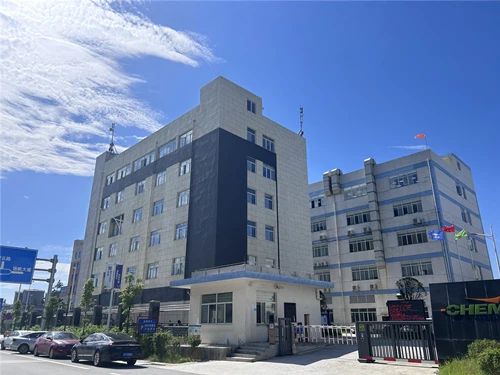
YUEYANG CHEM WATERBORNE ADDITIVE CO., LTD. was established in 2010 and is located in Yueyang, Hunan. It specializes in the R&D, production and sales of environmentally friendly additives. CHEM-ADDITIVE has technical teams for chemical analysis, chemical synthesis and additive application, and has established extensive industry-university-research cooperation with scientific research units such as Huazhong University of Science and Technology, Wuhan University, Hunan University, and Central South University of Forestry and Technology. The company has hired a team of professional consultants composed of industry experts and professors. After more than 10 years of practice and accumulation, YUEYANG CHEM WATERBORNE ADDITIVE CO., LTD. has established a good corporate image among domestic and foreign customers. CHEM-ADDITIVE's acetylenic alcohol multifunctional surfactant was supported by the Innovation Fund Project of the National Ministry of Science and Technology and the Hunan Provincial Department of Science and Technology in 2012 and 2013, and successfully passed the project acceptance. At present, the company has a number of invention patents with independent intellectual property rights, and is one of the major manufacturers and suppliers of acetylenic alcohol waterborne surfactants, SMA and silicone in the world.



FAQ
Hot Tags: organic silicone defoamers, China organic silicone defoamers manufacturers, suppliers, factory, Titanium Dioxide Dispersant, Ammonium Salt Dispersants, Polyphosphate Ester Dispersants, Organic Yellow Pigment Dispersant, Defoaming Agent For Grinding, Defoamers For Water based Containers